
Key Takeaways in 30 Seconds:
- Over 75% of washing machine draining failures in Dubai are caused by a clogged coin trap or foreign object lodged in the pump impeller chamber.
- Never force open a locked front-load door while water stands above the lower drum seal level—this can flood the control board and kitchen floor.
- Common brand drain error codes include: 5E / 5C (Samsung), OE (LG), E18 / F18 (Bosch & Siemens), and F03 (Whirlpool).
- If the drain pump hums loudly without rotating, the magnetic rotor impeller or motor winding has likely failed due to continuous strain.
- A complete electrical and physical diagnostic can be safely conducted in 5 structured steps before requesting professional doorstep repair.
Introduction: Why Washing Machines Stop Draining
Few household issues disrupt a Dubai home faster than opening your washing machine at the end of a 60-minute cycle only to discover laundry submerged in standing, sudsy water. In modern automatic washing machines—whether front-load or top-load—water retention is an automated safety shutdown mechanism. When the electronic control board detects that water levels have not dropped within a pre-programmed threshold (usually 4 to 8 minutes), it halts the cycle, refuses to engage the high-speed centrifugal spin, and locks the door latch to prevent domestic flooding.
Across Dubai residential villas and luxury apartments in Dubai Marina, Downtown, Palm Jumeirah, and JVC, appliances operate under demanding conditions. Elevated water hardness, residual sand and dust particles, heavy detergent dosing, and frequent laundering of delicate fabrics create a unique environment where drainage pathways become compromised. Understanding the closed-loop hydraulic mechanism of your appliance allows you to isolate whether the issue is a simple 5-minute filter obstruction or an electrical pump failure requiring factory OEM replacement parts.
In this master diagnostic manual, Fix N Done certified senior appliance engineers walk you through the exact 5-step protocol used by field technicians to diagnose, clear, and verify washer drainage systems safely without damaging internal electronics.
The Top 5 Causes of Washer Drainage Failure in Dubai
Before picking up tools, it is crucial to understand where blockages and component failures occur inside modern appliances (Samsung, Bosch, Siemens, LG, Miele, Whirlpool, Beko, and Daewoo):
- Foreign Objects Trapped in the Coin Trap: Coins, bobby pins, garment hooks, toothpicks, and children's socks frequently bypass the drum baffle holes and travel directly down the tub-to-pump sump hose (eco-valve), becoming wedged against the magnetic pump impeller.
- Excessive Detergent & Softener Sludge Build-up: In Dubai's warm climate, using non-HE (High Efficiency) powder detergents or overdosing liquid detergent creates dense soap scum that calcifies inside the corrugated drain hose and air pressure chamber.
- Pinched or Improperly Elevated Drain Hoses: Modern washing machines rely on gravity and pump discharge head pressure. If the drain hose is installed lower than 65cm (causing siphoning) or higher than 100cm (causing backpressure), the pump will overheat and fail.
- Burned Drain Pump Motor Windings: The magnetic synchronous pump motors in modern washers operate at high RPM. When an obstruction blocks the rotor while power is supplied, the internal copper stator windings overheat, resulting in an open circuit or burned armature.
- Faulty Electronic Pressure Switch / Air Dome Clogging: The pressure transducer sensor communicates the precise water level to the main PCB via air displacement. If the small silicone air hose becomes blocked with lint, the mainboard assumes the tub is still full and refuses to spin.
Manually Drain the Drum & Clean the Coin Filter
The bottom-front service hatch of your front-load washing machine conceals the primary debris filter. Attempting to unscrew this filter while the drum is filled with 15 to 25 liters of water will cause sudden flooding. Follow this controlled drainage procedure:
- Disconnect Power: Always remove the 220V–240V three-pin power plug from the wall socket before proceeding with any wet maintenance.
- Prepare the Workspace: Lay two thick bath towels and a flat baking tray or shallow plastic container directly underneath the lower access flap.
- Utilize the Emergency Drain Tube: Open the hinged hatch door. Locate the small black or grey rubber tube positioned next to the round filter cap. Pull the tube out gently, uncap the rubber stopper over your shallow tray, and allow the water to drain gradually. Empty the tray as needed until water flow stops completely.
- Unscrew the Coin Filter: Turn the large round filter knob counter-clockwise (typically 3 to 4 full turns). Pull the cylindrical filter assembly outward.
- Inspect and Clean the Chamber: Remove all trapped lint, coins, bra underwires, and hair clumps from the filter mesh. Wash the filter under warm running tap water with an old toothbrush.
- Inspect the Internal Impeller: Shine a smartphone torch into the open filter housing cavity. At the rear, you will see the 3-blade or 4-blade plastic pump impeller. Using your finger or a wooden chopstick, test if the impeller rotates. In magnetic synchronous pumps, it should rotate in distinct 90-degree clicks with light springy resistance. If it feels completely jammed, locked by tangled thread, or loose on its central shaft, the pump assembly requires replacement.
Inspect the Drain Hose for Kinks and Height Issues
The external discharge path behind the appliance accounts for approximately 20% of reported drainage timeouts. If the pump operates but water fails to reach the building waste pipe, perform these essential checks:
- Check for Crush Kinks: When appliances are pushed deeply back under laundry room counters, the flexible ribbed drain hose can easily pinch against the rear drywall or copper plumbing pipes. Pull the machine forward 10cm and inspect the entire length of the hose for flattening or sharp 90-degree bends.
- Verify Discharge Height Compliance: The discharge hook must be positioned between 65 cm (25 inches) and 100 cm (39 inches) above finished floor level. If the hose connection is too low, water will siphon out continuously during the wash cycle. If it exceeds 100 cm, the head pressure exceeds the pump motor rating, causing premature pump burnout.
- Check Under-Sink Spigot Connection: In many Dubai apartments, the washer drain connects to a dedicated spigot underneath the kitchen sink. If this is a new installation, verify that the internal plastic knockout plug inside the sink trap spigot was drilled out. If an existing installation, disconnect the hose clamp and clear greasy food residue that frequently backs up into the washer line from the kitchen sink.
- Perform a Blow-Through Flow Test: With the hose disconnected from the wall standpipe and lowered into a bucket at floor level, blow gently through the hose. Air should pass into the drum freely without heavy resistance.
Test the Drain Pump Motor with a Multimeter
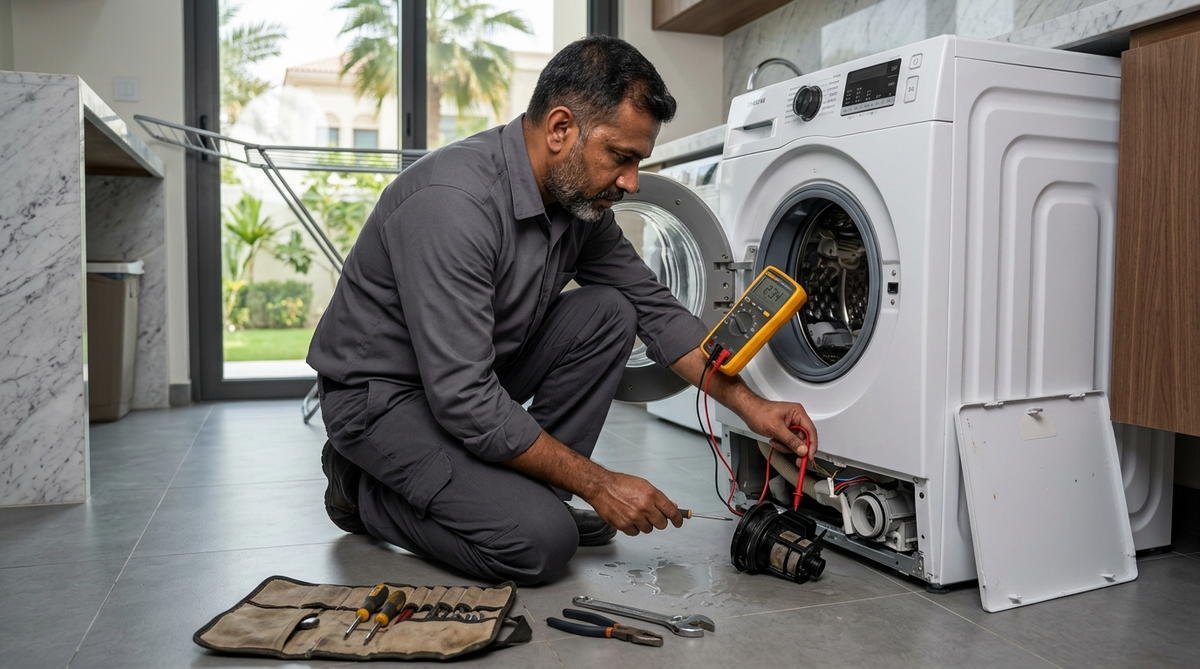
When the filter and hoses are completely clean but the appliance hums, vibrates, or remains silent during the drain cycle, the pump motor must be tested electrically. Fix N Done technicians utilize calibrated digital multimeters to measure resistance across the pump terminals:
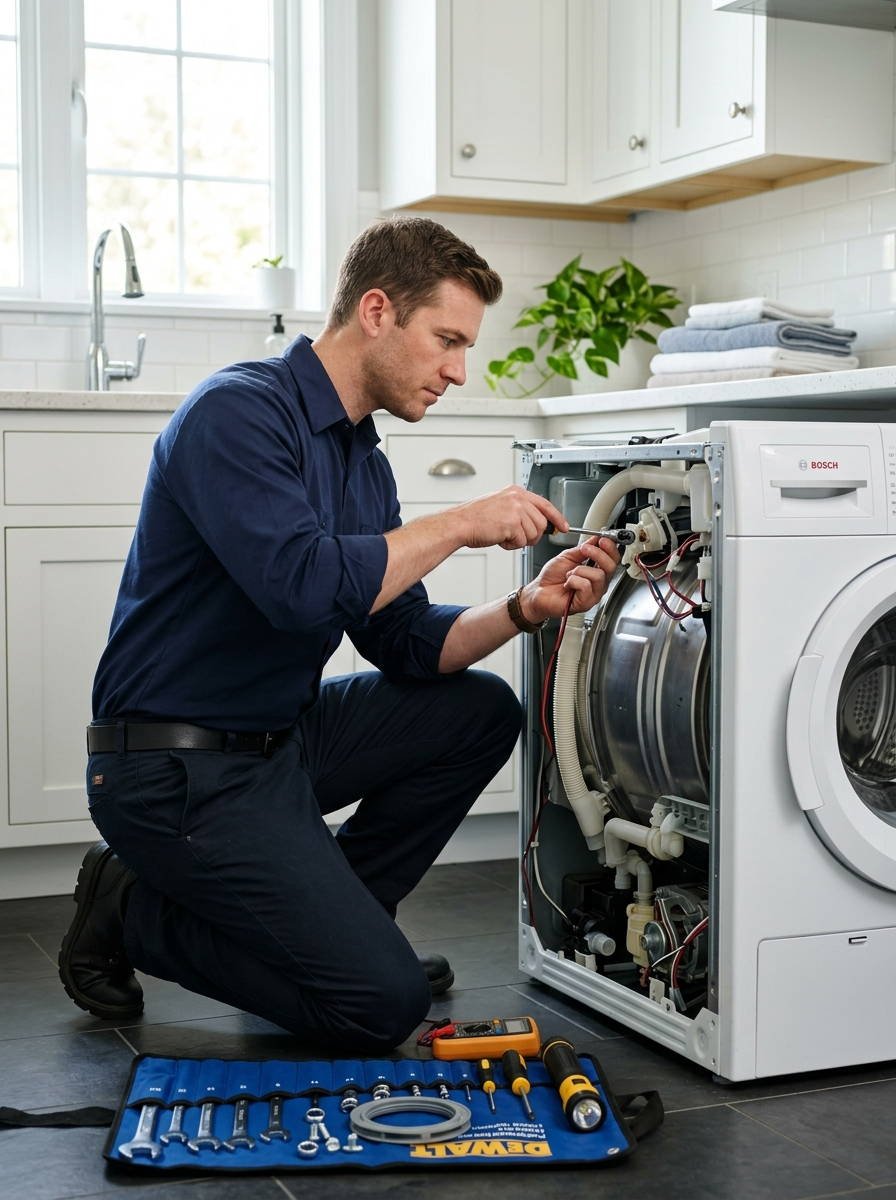
- Gain Access to the Pump Assembly: Unplug the machine, remove the rear access panel or bottom service plate, and locate the pump housing attached to the base frame.
- Disconnect the Wiring Harness: Carefully unclip the two spade connectors or multi-pin terminal plug connecting the mainboard harness to the pump motor terminals.
- Measure Stator Coil Resistance (Ω): Turn your digital multimeter to the lowest Resistance / Ohms (Ω) scale (e.g., 200Ω or 2kΩ). Place the red and black multimeter test probes firmly against the two exposed copper terminals of the pump motor.
- Interpret the Resistance Values:
- 150 Ω to 280 Ω (Normal): The electrical winding is intact. If the pump still fails to turn when powered, the mechanical shaft bushings or rotor magnetic poles are stripped.
- 0 Ω or < 10 Ω (Short Circuit): The internal coil enamel has melted, creating a direct short that trips household RCD circuit breakers. The pump is defective.
- Infinite / O.L. (Open Circuit): The internal thermal fuse or copper coil wire has severed. The pump cannot receive electrical current and must be replaced.
Washing Machine Drain Error Codes by Brand
When a drainage failure occurs, modern microcontroller boards evaluate the sensor telemetry and flash a specific alphanumeric fault code. Here is the master Fix N Done diagnostic reference matrix for major brands serviced across Dubai:
| Appliance Brand | Drain Error Code | Exact Technical Meaning | Recommended Professional Action |
|---|---|---|---|
| Samsung EcoBubble / AI | 5E / 5C / nd / SE | Drainage timeout (water level frequency static after 8 mins) | Clean debris coin trap; test drain pump coil resistance; check PCB triac output |
| LG DirectDrive / ThinQ | OE / OF | Unable to discharge water within 10-minute threshold | Clear filter chamber; inspect magnetic impeller rotor; test pressure switch sensor |
| Bosch & Siemens (Serie 4/6/8/iQ) | E18 / F18 / E06 | Drain pump filter blocked or water evacuation timeout | Unscrew bottom filter; check rear drain hose height; inspect non-return valve |
| Miele (W1 Series / TwinDos) | Check Drain (LED) / F11 | Discharge flow rate below minimum safety threshold | Clean non-return ball valve; clear sump eco-chute; replace OEM drain pump motor |
| Whirlpool & Indesit | F03 / F21 / FP | Long drain detected (exceeded 8-minute evacuation window) | Inspect wiring harness continuity to pressure transducer; replace pump assembly |
| Beko & Daewoo | E05 / H5 / E2 | Drain pump failure or pressure switch calibration error | Clean filter basket; verify silicone pressure tube; replace faulty pump unit |
Test the Water Level Pressure Switch & Air Tube
If your washing machine successfully pumps out all physical water through the hose, but still stops with a drain error code and refuses to start spinning, the problem lies in the analog pressure sensor system:
- How the System Operates: As the drum fills or empties, air inside a sealed bottom plastic chamber (the air dome) is compressed. This air pressure travels up a narrow 6mm silicone tube to the electronic pressure switch mounted under the top lid.
- The Sludge & Limescale Blockage: Over years of washing at low temperatures (30°C–40°C), dense detergent gelatin and lime scale accumulate inside the bottom air dome. This traps pressurized air even after the tub has fully drained. The sensor falsely signals to the mainboard that the tub is still flooded.
- How to Clear It: Disconnect the silicone tube from the pressure switch nipple under the top lid. Blow firmly down into the tube. You should hear bubbling or air rushing into the empty sump chamber, dislodging soap plugs. Reattach the tube tightly with its spring clamp and retest the spin cycle.
Preventative Maintenance Blueprint for Dubai Homeowners
To safeguard your appliance against future drainage blockages and extend the operational life of its pump motor by 5 to 7 years, implement these routine maintenance habits:
- Monthly 90°C Drum Sanitization Cycle: Run an empty maintenance cycle at maximum water temperature (90°C) with 200g of food-grade citric acid or dedicated washer descaler. This dissolves stubborn soap fats, hair grease, and limescale before they solidify inside the pump sump.
- Clean the Coin Trap Every 30 Days: Set a recurring monthly calendar reminder to unscrew the bottom filter and flush accumulated debris.
- Correct Detergent Dosing: Avoid the common belief that more soap equals cleaner clothes. In modern high-efficiency front loaders, excess detergent generates dense micro-suds that cushion pump impellers, leading to cavitation, air locks, and drainage timeouts. Use exactly the manufacturer-recommended dosage based on laundry weight.
- Use Mesh Laundry Bags for Delicates: Baby socks, face masks, lingerie underwires, and microfiber handkerchiefs should always be placed inside zippered mesh washing bags to prevent them from slipping over the drum lip into the sump.
When to Schedule Professional Fix N Done Doorstep Service
If you have cleared the coin filter and verified the drain hose, but your machine continues to trigger error codes, produce burning electrical smells, or trip your villa's circuit breaker, internal control board triac components or internal drum spider bearings may be compromised. Continuing to force-run the machine can result in permanent PCB destruction.
Our mobile service fleet carries 100% genuine factory OEM drain pumps for Samsung, LG, Bosch, Siemens, Miele, Whirlpool, and Beko with guaranteed 1-hour rapid doorstep arrival across all 27+ Dubai communities.